Monday
Review changed offers, destinations, and creator availability.
High-volume inbox playbook
Scale the routine parts of the inbox while protecting the conversations that create trust, revenue, and long-term relationships.
Decide what the inbox is supposed to accomplish. For a subscription creator, that may include answering offering questions, guiding interested fans to an official destination, protecting boundaries, and surfacing business opportunities.
Then review a representative week of inbound messages. Group only the intents that truly repeat. Common groups include what the creator shares, where to find it, follow-up clarification, collaboration inquiries, payment concerns, custom requests, and spam.
Write the answerable facts before adding automation. Include the creator's offering language, official destination, availability, and claims that must never be made.
Keep each creator's voice separate. An agency should never share one generic persona across accounts. Loresta supports distinct voice profiles, inbox connections, conversation context, and boundaries by creator.
Define owner work explicitly: paid collaborations, payments, custom requests, personal messages, legal or safety topics, and low-confidence questions. A handoff is a successful outcome, not an automation failure.
Choose the response mode by risk and plan. Teams may begin with drafts, review samples, then enable safe automatic replies for tightly defined routine intents. The Loresta plan comparison explains capacity and reply modes.
At scale, repeated or contradictory replies create more work than they save. Read the relevant conversation so follow-ups stay coherent and already-shared information is not repeated.
Set a monthly allowance and decide whether optional overage should be enabled. Loresta counts safe replies it drafts or sends. Spam and conversations returned to the owner do not use reply capacity.
Review a sample of handled conversations, all handoff categories, and any reply the creator corrected. Update facts or voice notes when the same issue appears more than once.
Track useful replies, handoff volume, recurring intent, response capacity, and creator corrections. Do not optimize for the highest automatic-send percentage. Optimize for less routine work with no loss of trust.
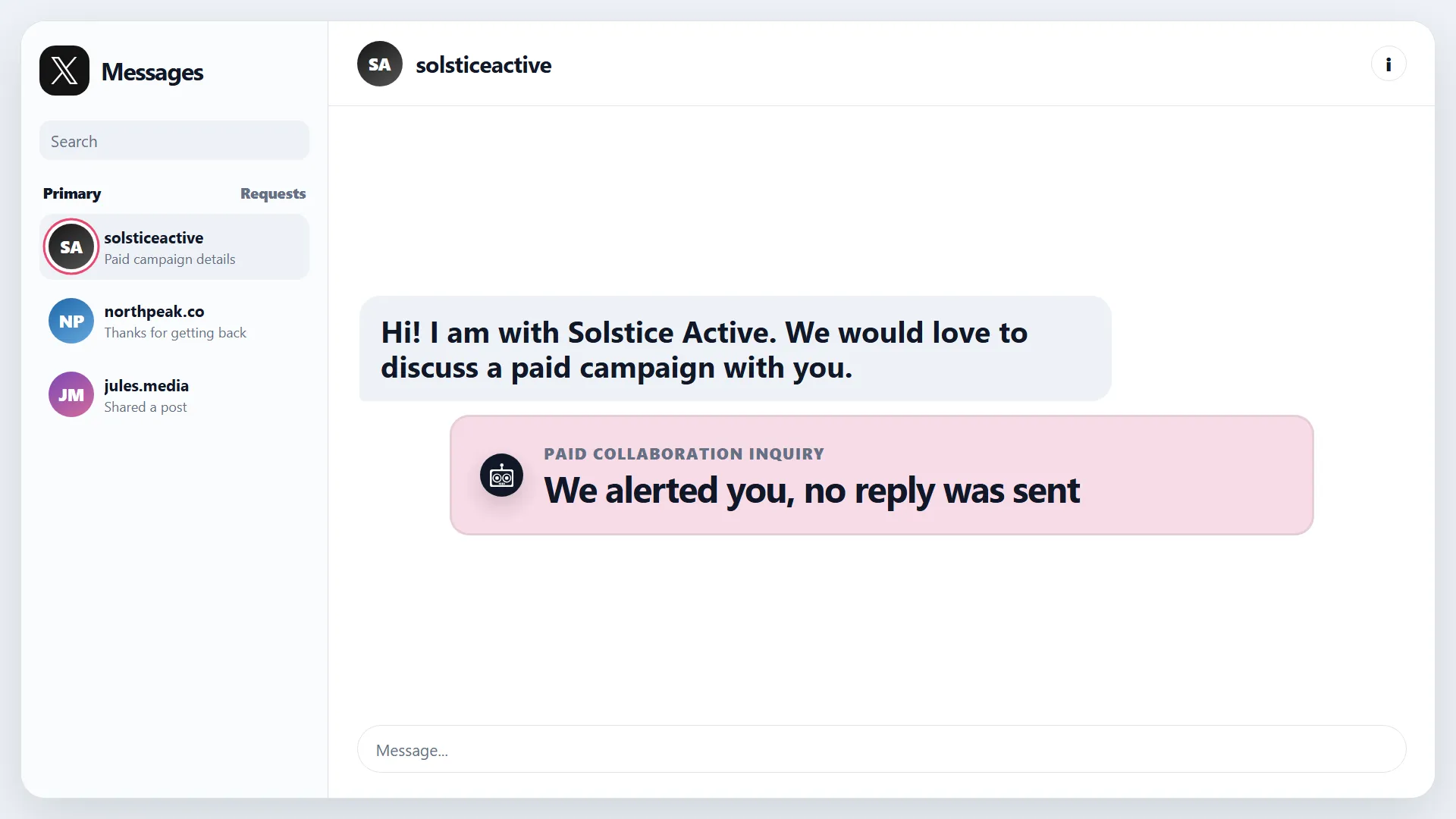
Scale through routing
Business intent is surfaced clearly while the system leaves negotiation and personal judgment to the creator.
Small scheduled reviews keep facts, voice, and boundaries current.
Review changed offers, destinations, and creator availability.
Inspect handoffs and any corrected or rejected drafts.
Compare useful replies, capacity, and recurring unanswered intent.
Adjust plan capacity, overage preference, and team access.
Use this sequence before adding another inbox or creator profile.
Direct answers for creators and operators comparing DM automation.
They separate recurring answerable questions from personal, sensitive, and business conversations, then use approved facts, creator-specific voice, thread context, handoffs, and capacity controls.
Prioritize business opportunities, payment or safety issues, personal conversations, and uncertain messages. Routine offering questions can be handled with approved assistance.
Yes, provided every creator has a separate voice profile, approved facts, account connection, conversation context, and access controls.
There is no universal target. A lower rate with correct handoffs is better than a high rate that automates sensitive or valuable conversations.
Track useful replies, handoffs, recurring intents, creator corrections, remaining capacity, and whether interested fans reached the correct destination.
Loresta keeps creator voices separate, routes high-value intent, and makes monthly reply capacity visible.